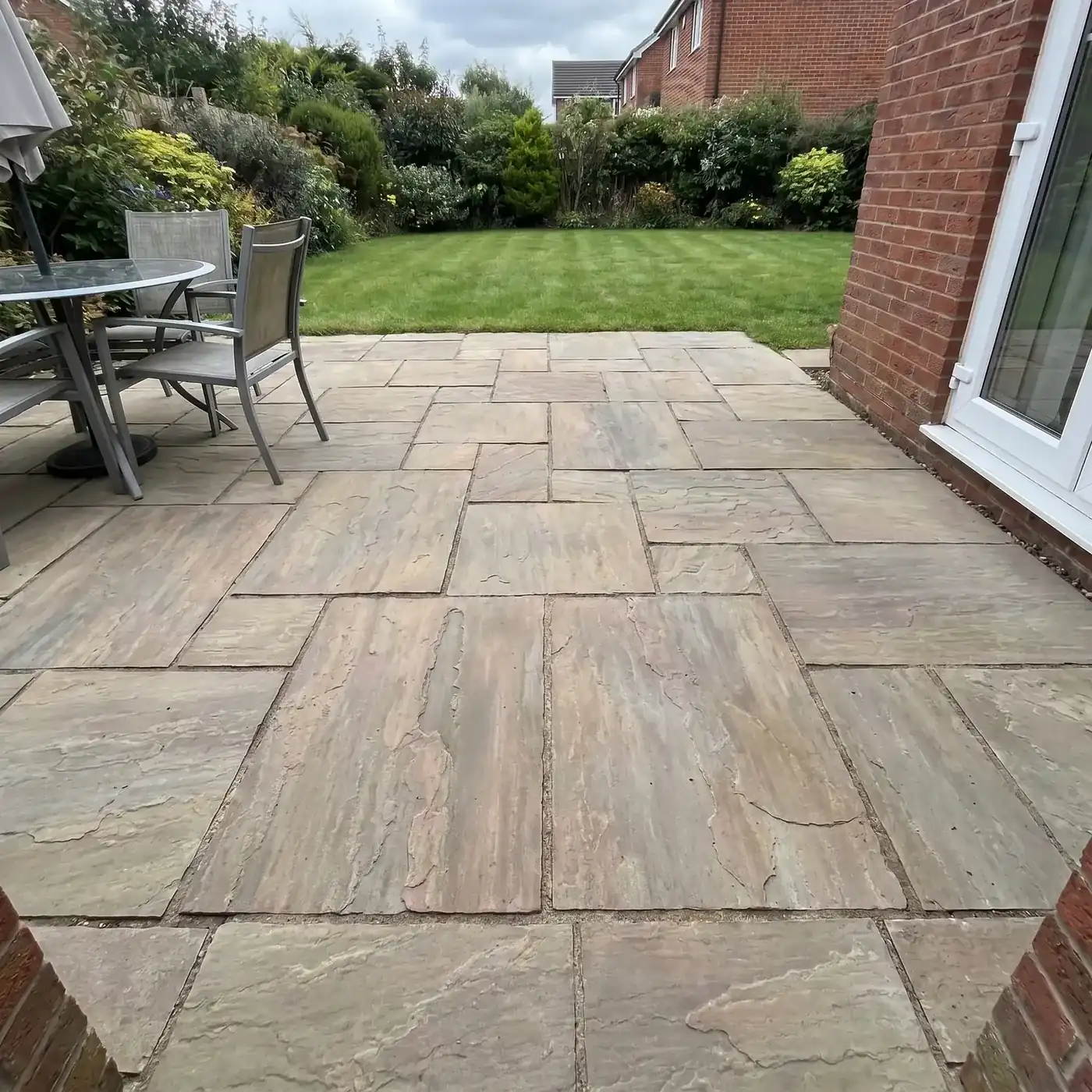
Is Pressure Washing Safe for Indian Stone? The Honest Answer
Indian stone is beautiful but unforgiving. High pressure washers damage it every time — here's why and how to get it clean without destroying the surface.
5.0 Google Rating
Rated 5.0 across all Google reviews
Fully insured
Verified, insured, backed by Google
Smart Seal Approved
Certified installer
No Deposit — Ever
100% satisfaction guaranteed
10+ Years Experience
200+ Essex properties cleaned
Fully Insured
Public liability cover
The Direct Answer
Is pressure washing safe for Indian stone? Not at high pressure. Indian stone is soft and natural — high pressure damages the surface, weakens the joints and can strip the colour. The safe way is low pressure (under 130 bar) with a pH-neutral cleaner made for natural stone. Done right, your patio comes up looking new without damage.
Why Indian Stone Needs Special Care
Indian stone is natural and very porous — completely unlike porcelain or concrete. When you blast it with high pressure, you're not just removing dirt. You're breaking down the crystalline structure at the surface and weakening the edges of each flag. Once that texture is damaged, you can't get it back. In Brentwood and Basildon, we see homeowners who've tried the DIY route with hired pressure washers, and the damage is permanent: pitted surfaces, weakened joints, and flags that have lost their character.
The real problem? High pressure doesn't respect natural stone. It finds the softest paths through the rock and exploits them. That's how cracks start.
The Chemical Risk: Efflorescence and Discolouration
It's not just the pressure. Wrong chemicals cause efflorescence — those white salt deposits that bubble up from inside the stone weeks after cleaning. They're the stone's own minerals being pushed to the surface by incorrect pH cleaners. Some domestic products use bleach or harsh alkaline solutions that literally strip the colour from Indian stone or leave it permanently patchy and faded. We've seen beautiful Indian stone patios in Colchester turn grey after a well-meaning DIY clean with the wrong product. It's heartbreaking and permanent.
The Right Method: Low Pressure and pH-Neutral Chemistry
Professional cleaning of Indian stone starts with a pH-neutral cleaner matched to natural stone. We apply it and let it work — this is called dwell time. The chemistry dissolves the algae and dirt at the root without attacking the rock. Then we rinse at low pressure: we're talking 100–150 bar, not the 200+ bar a domestic pressure washer fires out. The nozzle angle matters too. We clean at 45 degrees, moving with the grain, never against it. This removes without shredding.
Joint Protection Is Critical
Indian stone pointing is more vulnerable than concrete joints. The mortar is often softer and the stones sit tighter together. High pressure forces water behind the flags, which then freezes in winter and expands. That's how joints fail. We protect the joints during cleaning — sometimes we'll even reseal them after if they need it — because joint failure is how water gets underneath and ruins the whole patio.
Biocide: Why Regrowth Matters
After a clean, Indian stone is at its most vulnerable. Without protection, black lichen specific to natural stone grows back faster than on concrete. We always apply professional biocide, which penetrates the stone and kills the organism at the root. This residual protection keeps the patio clean 3–5 times longer than pressure washing alone.
Why DIY Almost Always Fails
A domestic pressure washer does two things wrong at once: too much pressure and no residual protection. You get a clean that lasts weeks and a surface that's been abraded. By the time you realise the stone has pitted or the colour has changed, it's too late. We've quoted thousands in repair work because someone saved £200 on a DIY clean.
FAQ: Can You Restore Indian Stone That's Already Been Damaged by High Pressure?
Sometimes, but not always. If the damage is surface etching only, re-cleaning at low pressure and applying a colour-enhancing seal can disguise some of the pitting and restore depth to the colour. If the flags themselves are cracked or the edges are shattered, that's physical damage that can't be reversed. The best outcome for damaged Indian stone is improving its appearance, not fully restoring it. Prevention is everything with natural stone.
FAQ: Will pressure washing remove the colour from Indian stone?
High-pressure washing with the wrong chemistry (especially acidic or bleach-based products) will permanently bleach and discolour Indian stone. Low-pressure cleaning with pH-neutral natural-stone formulations preserves the colour fully — your patio looks restored, not stripped.
FAQ: Can damaged Indian stone be restored?
Surface etching from prior DIY damage can sometimes be improved with low-pressure re-cleaning and a colour-enhancing seal. Physical damage (cracked flags, shattered edges) is permanent. Prevention is everything with natural stone.
Ready for a free quote?
No deposit. No obligation. Call us directly on 07849 177724 or message us on WhatsApp.
Written by our team
Owner, Essex Moss Removal · Essex
Our team has cleaned driveways, roofs, patios and gutters across Essex for years. Every job done personally — no subcontractors, no shortcuts. Fully insured and fully insured.
What Essex customers say
“Excellent service from start to finish! Did a fantastic job cleaning the moss off my roof. Punctual, professional and incredibly thorough. They explained the process clearly, worked efficiently, and left everything spotless. My roof looks completely renewed. Highly recommend to anyone needing reliable moss removal.”
Want results like these for your property?
No deposit. No obligation. Free quote — usually within 24 hours.
Learn more about our Patio Cleaning service →