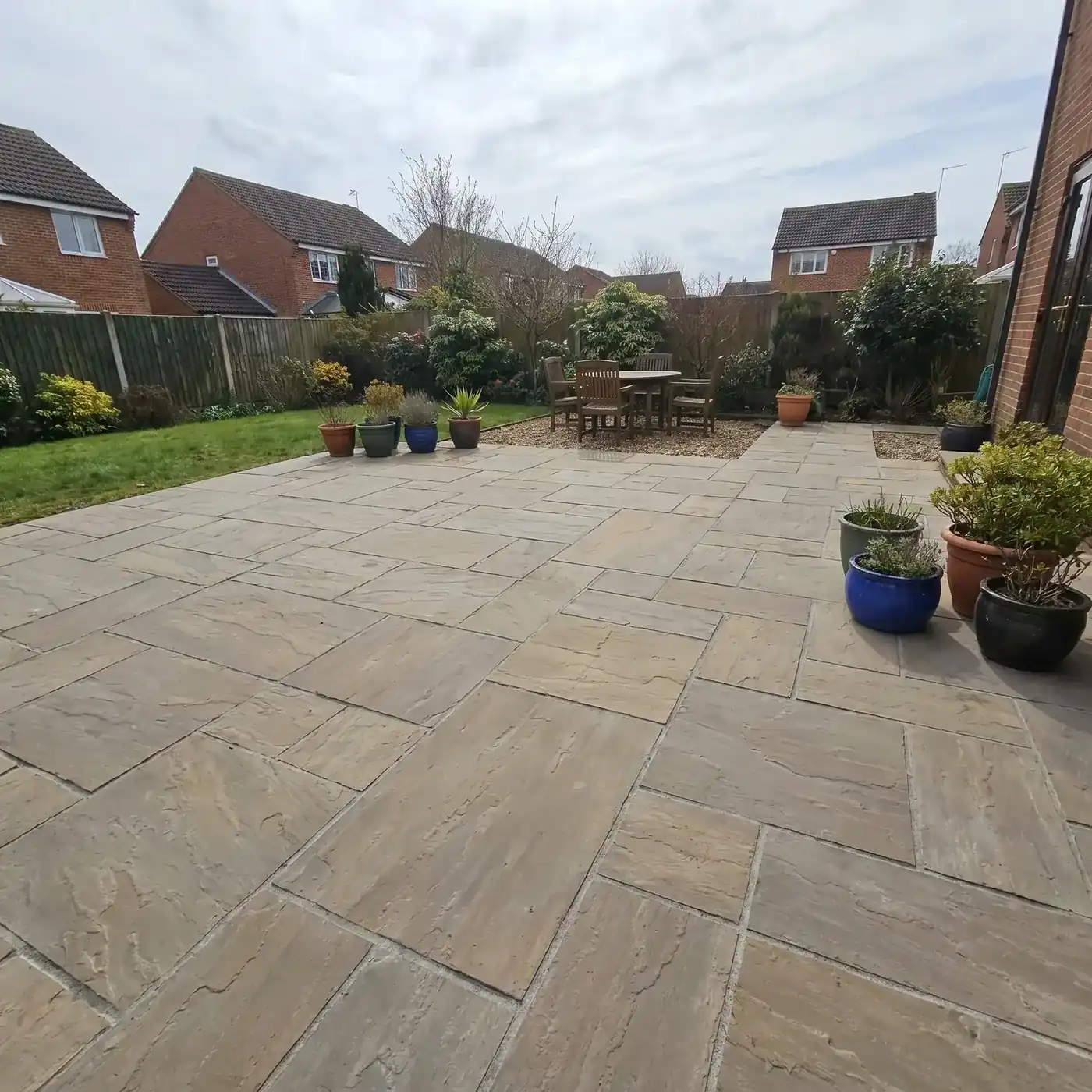
Indian Stone vs Porcelain Patios: How Cleaning Differs
Indian stone and porcelain need completely different cleaning approaches. Apply the wrong method and you'll damage the surface permanently.
5.0 Google Rating
Rated 5.0 across all Google reviews
Fully insured
Verified, insured, backed by Google
Smart Seal Approved
Certified installer
No Deposit — Ever
100% satisfaction guaranteed
10+ Years Experience
200+ Essex properties cleaned
Fully Insured
Public liability cover
The Direct Answer
How do you clean Indian stone and porcelain patios? Not with a normal pressure washer. The right method is low pressure (under 130 bar) and a pH-neutral cleaner made for natural stone. High pressure etches the surface, blasts out the joints and can strip the colour. Done right, the patio comes up beautifully and biocide keeps it clean for 1–3 years.
Two of the most common patio materials in Essex are Indian stone and porcelain. They look completely different, they cost differently, and most importantly, they need completely different cleaning methods. Use a one-size-fits-all pressure washing approach and you'll damage one of them. Here's how to tell them apart and what each one needs.
Indian stone: beautiful, porous, and acid-sensitive
Indian stone (sandstone and slate from the Indian quarries) is gorgeous. It's warm, textured, and ages beautifully. It's also porous — meaning water, oils, and chemicals soak right in. That's where most of the problems start.
Here's the critical thing: Indian stone is sensitive to acidic cleaners. Vinegar, acidic commercial cleaners, even some pressure washer chemicals will chemically etch the surface. You'll see it as a dull, bleached appearance. That damage is permanent. You can't polish it out or seal over it.
Porcelain: dense, durable, and less forgiving of pressure
Porcelain tiles are engineered products, not natural stone. They're much denser than Indian stone, which means they're more resistant to staining. But that density also means they're more likely to crack or chip if hit with high pressure.
Porcelain is relatively acid-resistant (you can use acidic cleaners), but excessive pressure or shock damage is the enemy. A porcelain tile cracked by high pressure will eventually fail completely.
Black lichen on Indian stone: the hardest problem to solve
The dark streaks you see on some Indian stone patios aren't algae or mould — they're lichen. Lichen is a hybrid organism (part fungus, part algae) that bonds to stone surfaces incredibly strongly. It's also naturally acid-resistant, which means standard cleaners don't work.
The only way to remove established lichen from Indian stone without damaging it is with specialist biocide treatment formulated specifically for stone surfaces. It requires knowledge of what the stone is (colour, quarry origin) because different treatments work better on different stones. Apply the wrong chemical and you risk etching or discolouring the stone.
Why one-size-fits-all pressure washing fails
A standard pressure washing company will arrive with a gun set to 3,000 PSI and blast everything the same. That pressure is fine for concrete driveways but will:
- Etch and pit Indian stone surfaces
- Crack or chip porcelain tiles
- Blast the jointing sand out, requiring re-jointing
- Push water deep into the pores of stone, causing interior water damage and frost risk
You'll get a clean patio. For about 3 months. Then you'll notice damage: discolouration, cracks, or loose jointing. You can't unsee that damage or undo it.
How Indian stone patios should be cleaned
Indian stone needs:
- pH-neutral pre-treatment: A cleaner that's specifically formulated to be neutral or slightly alkaline, not acidic. This softens moss and lichen without etching.
- Low pressure application: 500–1,000 PSI maximum. We use pressure appropriate to the stone type, not a standard setting.
- Specialist lichen treatment: For black lichen, a biocide formulated for stone with time to work. Pressure alone won't remove it.
- Joint protection: We protect jointing during cleaning so sand doesn't wash out.
- Sealing (optional): Smart Seal can be applied to Indian stone to protect it from stains and make future cleaning easier. This is genuinely beneficial for porous stone.
How porcelain patios should be cleaned
Porcelain is more forgiving but still needs respect:
- Low-to-medium pressure: 1,200–1,800 PSI. High enough to be effective, low enough not to risk cracks.
- Appropriate detergent: A mild alkaline or neutral detergent. Porcelain can handle acidic cleaners, but we avoid anything harsh.
- Joint care: Same as with stone — protect jointing during the clean.
- Sealing: Porcelain doesn't need sealing the way stone does, but Smart Seal can be applied for enhanced protection.
The joint problem on both
Whether you have Indian stone or porcelain, the jointing sand is vulnerable. High pressure blasts it out. Once it's gone, joints are weak, water pools in the gap, and weeds start growing through. If your jointing has been damaged by aggressive cleaning, it needs to be re-sanded, which is an additional cost.
Proper technique protects jointing. Poor technique damages it.
A test patch is essential
If you've never had your specific patio cleaned professionally, we always do a small test area first. This shows:
- Exactly how the stone will respond to cleaning
- Whether any sealing is needed or recommended
- The final colour and appearance
- Whether the pressure and chemicals are appropriate
We won't proceed with a full clean until you're happy with the test result. No surprises.
FAQ: Will Indian stone get damaged if it's been left dirty for a long time?
Not from dirt itself, but lichen and algae rooting deep into the stone make professional cleaning take longer (and cost slightly more). The longer it's left, the more aggressive the biofilm becomes.
FAQ: Can pressure-washed Indian stone be restored?
Surface etching from past DIY damage can sometimes be improved with low-pressure re-cleaning and a colour-enhancing seal. Physical damage like cracked flags or shattered edges is permanent.
Different stones, different methods
There's no universal patio cleaning technique. Indian stone needs gentle, chemistry-led cleaning. Porcelain needs moderate pressure and care. Both need protection of jointing. Get it wrong and you pay for repairs; get it right and your patio looks pristine for years.
Written by our team
Owner, Essex Moss Removal · Essex
Our team has cleaned driveways, roofs, patios and gutters across Essex for years. Every job done personally — no subcontractors, no shortcuts. Fully insured and fully insured.
What Essex customers say
“Excellent service from start to finish! Did a fantastic job cleaning the moss off my roof. Punctual, professional and incredibly thorough. They explained the process clearly, worked efficiently, and left everything spotless. My roof looks completely renewed. Highly recommend to anyone needing reliable moss removal.”
Want results like these for your property?
No deposit. No obligation. Free quote — usually within 24 hours.
Learn more about our Patio Cleaning service →